Effective damp and mould prevention requires systematic approaches combining building performance optimisation, environmental management, tenant education, and proactive maintenance protocols tailored for social housing providers, BTR operators, and PBSA managers.
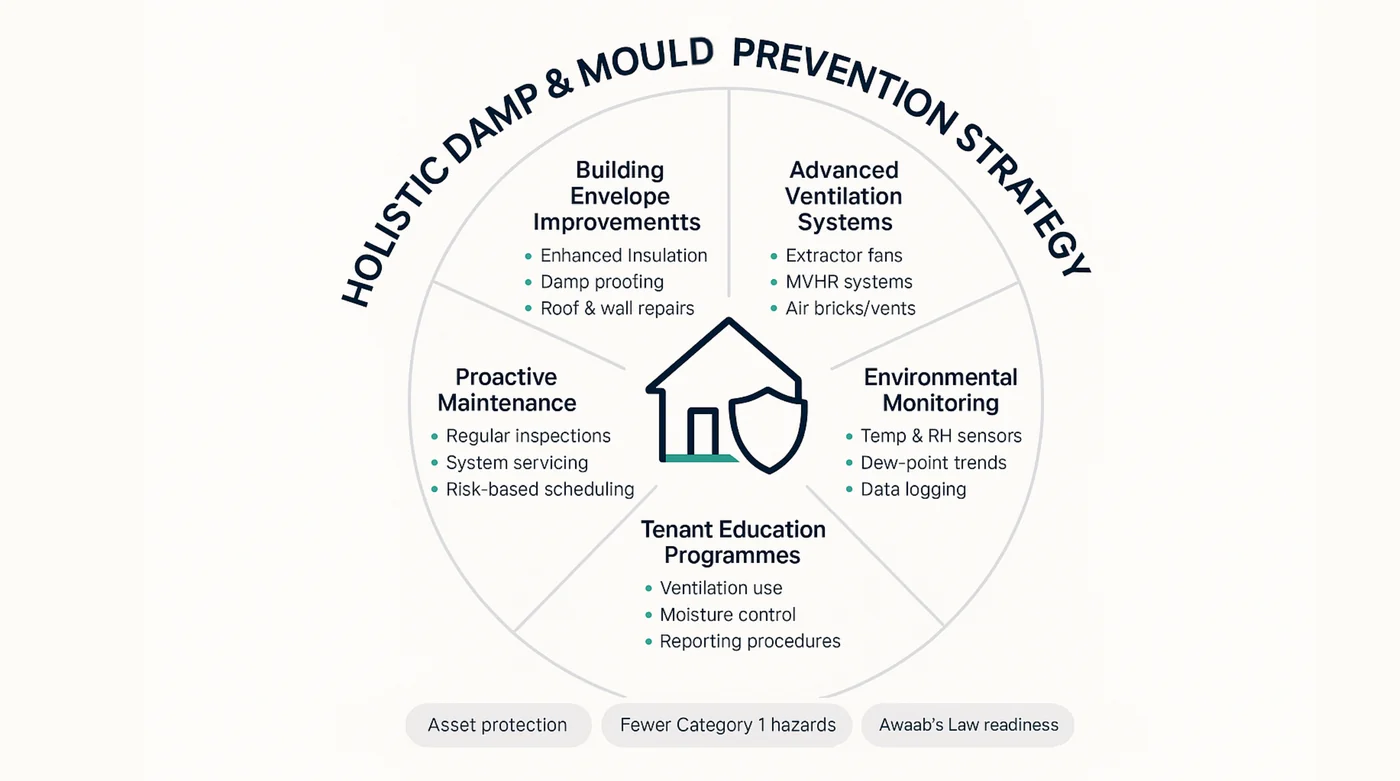
Foundation Principles of Effective Prevention
Successful damp and mould prevention operates on four fundamental principles that must be implemented simultaneously to achieve lasting results: controlling moisture sources, optimising building performance, ensuring adequate ventilation, and maintaining appropriate environmental conditions. These principles recognise that prevention proves significantly more cost-effective than remediation, with proactive programmes typically costing 60-70% less than reactive approaches whilst delivering superior health outcomes and tenant satisfaction levels.
Understanding the scientific basis of moisture behaviour in buildings enables property operators to develop targeted prevention strategies that address specific risk factors within their portfolios. Different property types present unique challenges, with social housing often experiencing high occupancy densities generating excessive moisture loads, student accommodation facing concentrated moisture generation from multiple occupants sharing facilities, and BTR properties requiring sophisticated ventilation systems to maintain air quality standards expected by premium tenants. Effective prevention programmes must be tailored to address these specific characteristics whilst maintaining cost-effectiveness and operational efficiency.
Prevention ROI Analysis
Comprehensive prevention programmes generate 4:1 return on investment within three years through reduced emergency repairs (£8,000+ per property), decreased void periods, improved tenant retention rates, and enhanced asset protection that preserves long-term property values.
Building Envelope Performance and Fabric Improvements
The building envelope forms the primary defence against moisture ingress, requiring systematic assessment and improvement to eliminate water entry pathways that create damp and mould conditions. Effective envelope management encompasses roof integrity, guttering systems, external wall performance, window and door seals, and damp proof course functionality, with regular inspection schedules identifying defects before they compromise internal environmental conditions.
Modern building performance standards emphasise the importance of continuous insulation layers and vapour control strategies that prevent thermal bridging and interstitial condensation formation. Thermal imaging surveys reveal hidden performance defects including insulation gaps, thermal bridges, and air leakage paths that compromise environmental control whilst increasing heating costs and condensation risks. Systematic fabric improvements including cavity wall insulation upgrades, external wall insulation systems, and advanced glazing installations enhance building performance whilst reducing moisture-related risks through improved thermal performance and surface temperatures.
| Building Element | Common Issues | Prevention Measures | Inspection Frequency |
|---|---|---|---|
| Roof Covering | Missing tiles, flashing failures | Annual inspection, immediate repairs | 6 months |
| Guttering Systems | Blockages, joint failures, overflow | Regular cleaning, seal maintenance | 3 months |
| External Walls | Pointing deterioration, crack development | Repointing programmes, crack sealing | 12 months |
| Windows/Doors | Seal degradation, drainage blockage | Seal replacement, drainage clearing | 6 months |
Ventilation System Design and Optimisation
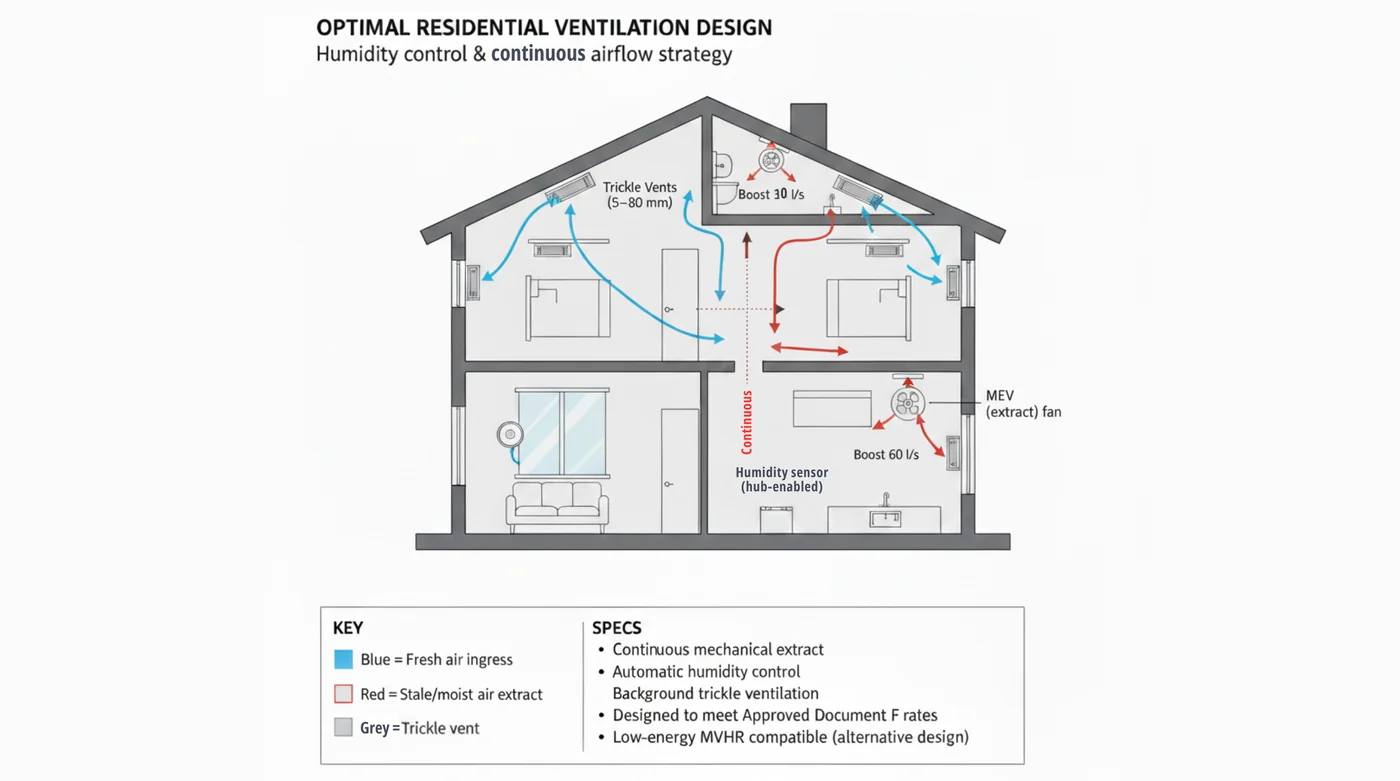
Adequate ventilation represents the most critical factor in preventing condensation-related damp and mould problems, requiring systematic assessment of ventilation provision against actual occupancy levels and moisture generation patterns. Many properties, particularly those converted from lower-density use or built before current occupancy standards, have inadequate ventilation capacity for contemporary living patterns that generate substantial moisture from cooking, bathing, clothes drying, and human respiration activities.
Mechanical ventilation systems require regular maintenance and performance optimisation to ensure effective moisture removal, with extract fan capacities, ductwork condition, and control systems all affecting overall performance. Modern ventilation strategies increasingly utilise heat recovery systems that maintain energy efficiency whilst providing adequate air exchange rates, supported by humidity-controlled extract systems that automatically increase ventilation rates when moisture levels rise above predetermined thresholds. Understanding ventilation principles enables property operators to identify deficiencies and implement targeted improvements that address specific moisture problems within different property types and occupancy patterns.
Ventilation System Components:
- Extract Ventilation: Kitchen and bathroom fans sized for actual occupancy levels
- Background Ventilation: Trickle vents and air bricks providing continuous air exchange
- Whole House Systems: MVHR units maintaining air quality whilst recovering heat
- Humidity Control: Automatic systems responding to moisture level changes
- Maintenance Programmes: Regular cleaning and component replacement schedules
Environmental Monitoring and Early Warning Systems
Proactive environmental monitoring enables early identification of conditions that promote damp and mould growth before visible symptoms develop, supporting prevention-focused maintenance strategies that address problems at source. Internet of Things (IoT) sensor networks continuously monitor temperature, relative humidity, and air quality parameters across property portfolios, providing real-time data that informs maintenance decisions and enables rapid response to emerging risks.
Advanced monitoring platforms integrate environmental data with weather forecasts, occupancy patterns, and building performance characteristics to predict risk scenarios and trigger automated responses including increased ventilation rates, heating system activation, or maintenance team alerts. Machine learning algorithms analyse historical data patterns to identify properties with elevated risk profiles, enabling targeted prevention programmes that address specific vulnerabilities before problems manifest. The integration of environmental monitoring with existing property management systems creates comprehensive asset management platforms that support both reactive maintenance and proactive risk management strategies.
Monitoring System Configuration:
- Sensor Placement: Temperature and humidity monitoring in all habitable rooms
- Alert Thresholds: Automatic notifications when RH exceeds 60% for >4 hours
- Data Integration: Connection with property management and maintenance systems
- Trend Analysis: Historical pattern recognition for predictive maintenance
- Response Protocols: Standardised procedures for different alert levels
Tenant Education and Engagement Programmes
Effective prevention requires active tenant participation through education programmes that promote moisture management behaviours and encourage early problem reporting. Many moisture-related issues stem from occupant activities including inadequate ventilation during cooking and bathing, clothes drying in poorly ventilated areas, and furniture positioning that restricts air circulation around external walls. Comprehensive education programmes address these behavioural factors whilst building positive relationships that support early problem identification and resolution.
Modern tenant engagement utilises multiple communication channels including digital platforms, printed materials, video content, and face-to-face sessions tailored for different demographic groups and learning preferences. Student accommodation requires particular focus on education programmes due to transient occupancy patterns and limited experience with independent living responsibilities. Social housing programmes often benefit from community-based approaches that build peer support networks and shared responsibility for property care. The effectiveness of education programmes can be measured through reduced complaint rates, improved environmental monitoring data, and enhanced tenant satisfaction scores. For detailed guidance on developing effective communication strategies, reference our comprehensive guide on communicating with tenants about damp and mould risks.
| Education Topic | Key Messages | Delivery Method | Target Audience |
|---|---|---|---|
| Ventilation Management | Extract fan use, window opening, air circulation | Video guides, printed materials | All tenants |
| Moisture Control | Clothes drying, cooking practices, shower habits | Interactive workshops, digital content | High-risk properties |
| Early Recognition | Problem identification, reporting procedures | Property handover, annual reviews | New tenants, renewals |
| Health Awareness | Health risks, vulnerable populations | Healthcare partnerships, community sessions | Families, elderly residents |
Proactive Maintenance and Inspection Protocols
Systematic maintenance programmes form the operational backbone of effective prevention strategies, requiring risk-based approaches that prioritise resources according to building characteristics, environmental conditions, and historical performance data. Proactive maintenance protocols encompass regular building fabric inspections, ventilation system servicing, environmental condition assessment, and early intervention procedures that address problems before they escalate to Category 1 hazards requiring immediate remediation under Awaab’s Law compliance obligations.
Maintenance scheduling must reflect seasonal variations in risk profiles, with heating season commencement creating elevated condensation risks, whilst wet weather periods increase penetrating damp threats requiring enhanced building envelope vigilance. Technology integration supports maintenance efficiency through mobile applications enabling real-time data capture, digital workflow systems tracking maintenance progress, and automated scheduling ensuring consistent delivery of planned maintenance activities. Performance monitoring through key performance indicators including response times, completion rates, and problem recurrence provides management information supporting continuous improvement initiatives and resource optimisation strategies.
Risk-Based Maintenance Priorities:
Properties with known vulnerabilities including poor thermal performance, inadequate ventilation, or previous moisture problems require enhanced maintenance frequencies and monitoring intensity. High-occupancy properties and those housing vulnerable populations receive priority attention regardless of building condition.
Technology Integration and Digital Solutions
Contemporary prevention programmes increasingly rely on digital technologies that enhance traditional maintenance approaches through data-driven decision making, automated alert systems, and predictive analytics capabilities. Integrated platforms combining environmental monitoring, maintenance management, tenant communication, and performance reporting create comprehensive solutions that support both operational efficiency and regulatory compliance requirements under evolving standards including Awaab’s Law and anticipated future regulations.
Artificial intelligence and machine learning applications analyse vast datasets to identify patterns and trends that inform prevention strategies, enabling personalised approaches that address specific property characteristics and occupancy behaviours. Automated systems can adjust heating and ventilation controls based on environmental conditions, weather forecasts, and occupancy patterns, optimising internal environments whilst minimising energy consumption and operational costs. The convergence of prevention technologies with broader sustainability objectives creates synergies between health protection, energy efficiency, and climate change adaptation goals that deliver multiple benefits through coordinated investment strategies.
Technology Integration Benefits:
- Early Detection: Problems identified before visible symptoms develop
- Automated Response: Environmental controls responding to changing conditions
- Predictive Analytics: Risk assessment based on building and occupancy characteristics
- Resource Optimisation: Targeted maintenance investment based on data analysis
- Performance Monitoring: Continuous improvement through outcome measurement
Regulatory Compliance and Future-Proofing
Prevention programmes must address current regulatory requirements whilst anticipating future standards that are likely to extend beyond social housing to encompass BTR operators, PBSA managers, and potentially broader private rental sectors. Understanding emerging regulatory trends enables property operators to implement prevention strategies that provide compliance advantages whilst demonstrating sector leadership in tenant health protection and asset management excellence.
Awaab’s Law establishes the foundation for prevention-focused approaches that address building performance deficiencies before health hazards develop, creating incentives for investment in comprehensive programmes that eliminate rather than manage moisture-related risks. The integration of prevention objectives with broader ESG compliance requirements creates business cases for enhanced investment levels that deliver multiple stakeholder benefits including tenant health protection, asset value preservation, regulatory compliance, and investor confidence. Understanding these interconnected benefits enables property operators to position prevention programmes as strategic investments rather than operational costs, supporting long-term business sustainability and competitive advantage development. For comprehensive guidance on regulatory compliance, explore our detailed analysis of Awaab’s Law compliance requirements.
Ready to take control of damp & mould risks in your portfolio? Discover proven tools for compliance and tenant protection.
Frequently Asked Questions
Related Resources
For comprehensive guidance on related topics, explore our additional resources:
- What Causes Damp and Mould in UK Homes? A Comprehensive Guide for Property Portfolio Operators
- Condensation vs Damp: Essential Diagnostic Guide for Property Portfolio Operators
- Awaab’s Law Explained: Essential Compliance Guide for Property Portfolio Operators
- Effective Communication with Tenants About Damp and Mould Risks