
Awaab’s Law is catalysing the most significant transformation in UK property management standards for decades, driving fundamental changes in operational approaches, technology adoption, and tenant engagement strategies across social housing, BTR, and PBSA sectors.
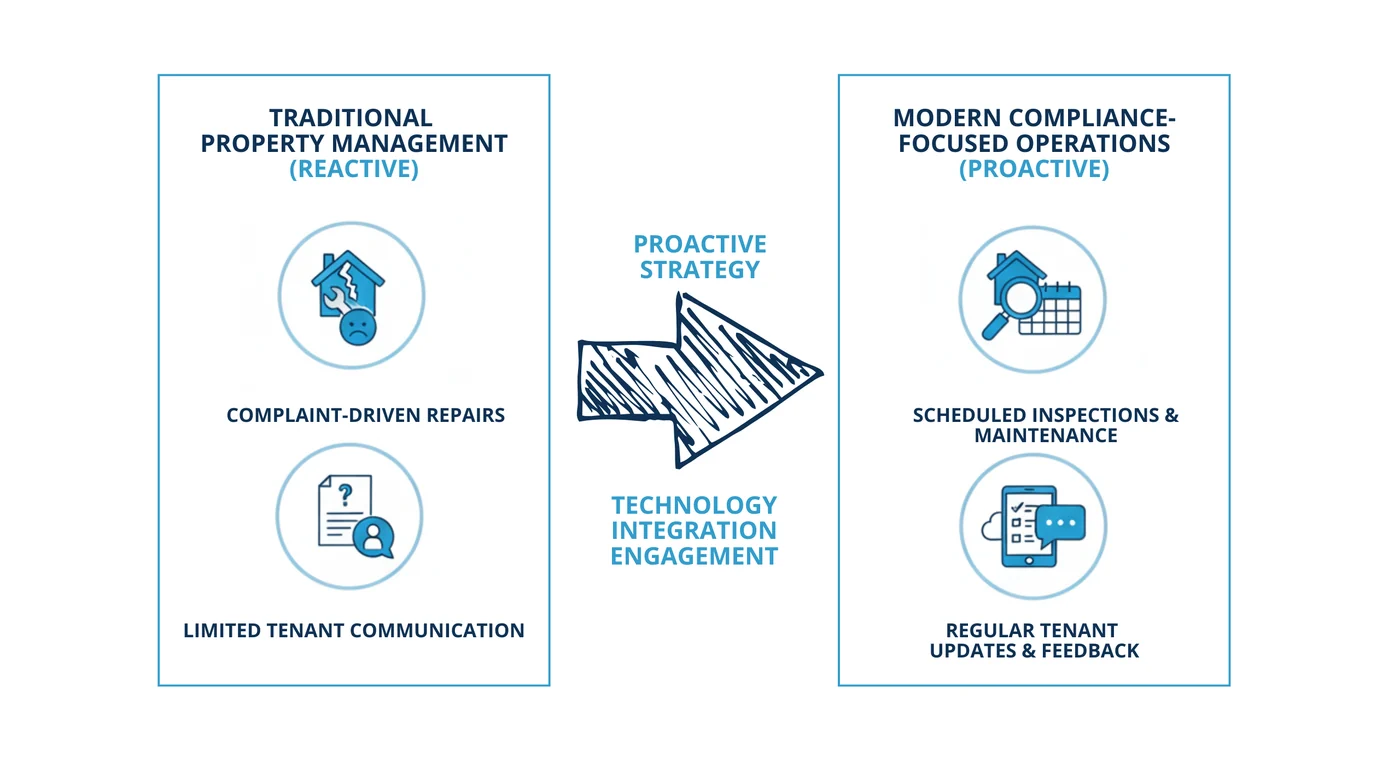
The Paradigm Shift from Reactive to Proactive Management
Awaab’s Law represents far more than additional regulatory compliance requirements; it fundamentally challenges traditional property management paradigms that historically prioritised reactive maintenance approaches over preventive strategies. The legislation demands systematic transformation from complaint-driven responses to predictive risk management, requiring property operators to identify and address potential hazards before they impact tenant health or trigger statutory intervention obligations.
This paradigm shift necessitates comprehensive operational restructuring encompassing risk assessment methodologies, maintenance scheduling, staff competency development, and technology integration to support proactive hazard identification. Traditional property management models focusing on cost minimisation through deferred maintenance prove incompatible with Awaab’s Law requirements, creating pressure for investment in preventive programmes that address underlying building performance issues rather than superficial symptom management. The transformation requires fundamental cultural change within property management organisations, shifting from reactive service delivery to proactive health protection obligations.
Management Paradigm Evolution:
- Traditional Approach: Reactive maintenance responding to tenant complaints
- Compliance Phase: Meeting statutory timeframes and documentation requirements
- Proactive Integration: Predictive risk assessment and prevention programmes
- Excellence Standard: Holistic asset management prioritising tenant health outcomes
Technology Integration and Data-Driven Decision Making
The implementation of Awaab’s Law accelerates technology adoption across the property management sector, driving investment in environmental monitoring systems, digital workflow platforms, and predictive analytics capabilities that support compliance obligations whilst enhancing operational efficiency. Internet of Things (IoT) sensor networks enable continuous monitoring of temperature, humidity, and air quality parameters, providing early warning systems that identify potential damp and mould risks before visible symptoms develop, supporting preventive intervention strategies.
Advanced data analytics platforms transform raw environmental monitoring data into actionable intelligence, enabling property operators to identify patterns and trends across property portfolios that inform targeted maintenance strategies and resource allocation decisions. Machine learning algorithms can predict property-specific risk profiles based on building characteristics, environmental conditions, and historical performance data, enabling personalised prevention programmes that address unique vulnerabilities within different property types and geographic locations. The integration of artificial intelligence supports automated alert systems that notify management teams when environmental conditions exceed predetermined thresholds, ensuring rapid response to emerging risks.
| Technology Solution | Primary Function | Compliance Benefit | Operational Impact |
|---|---|---|---|
| IoT Environmental Sensors | Continuous monitoring | Early hazard detection | Proactive maintenance |
| Digital Workflow Platforms | Case management | Timeframe compliance | Process standardisation |
| Predictive Analytics | Risk assessment | Prevention focus | Resource optimisation |
| Mobile Applications | Field data capture | Real-time documentation | Efficiency improvement |
Workforce Development and Competency Requirements
Awaab’s Law compliance demands significant investment in workforce development programmes that enhance staff competency in hazard recognition, risk assessment methodology, and regulatory compliance procedures. Traditional maintenance skills prove insufficient for meeting statutory obligations, requiring comprehensive training programmes covering Housing Health and Safety Rating System (HHSRS) assessment techniques, environmental monitoring interpretation, and effective tenant communication strategies that support early problem identification and resolution.
The complexity of modern building systems and environmental interactions requires specialist knowledge that extends beyond conventional property maintenance expertise. Staff must understand building physics principles affecting moisture behaviour, recognise early indicators of building performance problems, and implement systematic diagnostic approaches that differentiate between different moisture sources requiring distinct remediation strategies. Professional development programmes must encompass legal compliance requirements, health and safety obligations, and customer service excellence standards that support positive tenant relationships and encourage early problem reporting. For detailed guidance on effective tenant engagement, reference our comprehensive guide on communicating with tenants about damp and mould risks.
Essential Staff Competencies:
- Technical Skills: HHSRS assessment methodology and hazard recognition
- Diagnostic Abilities: Moisture source identification and building performance analysis
- Communication Skills: Effective tenant engagement and education delivery
- Compliance Knowledge: Statutory timeframes and documentation requirements
- Technology Proficiency: Digital platform utilisation and data interpretation
Financial Implications and Investment Requirements
The transformation required for Awaab’s Law compliance necessitates substantial financial investment across multiple operational areas, including technology systems, staff training, building improvements, and enhanced maintenance programmes. However, these investments generate significant long-term returns through reduced emergency repair costs, decreased void periods, improved tenant satisfaction, and enhanced asset protection that preserves property values and extends building lifecycles.
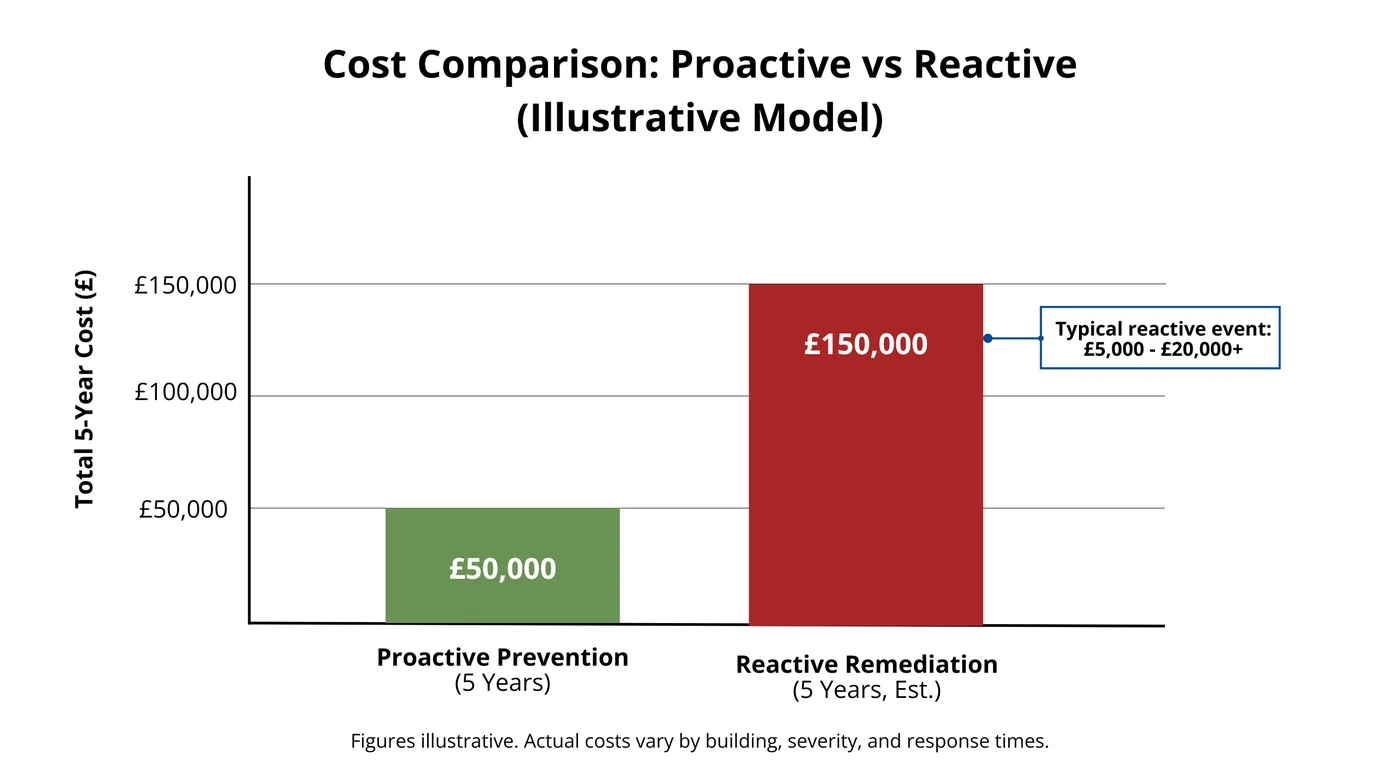
Analysis of early Awaab’s Law implementation indicates that proactive investment in prevention programmes typically costs 60-70% less than reactive remediation approaches, whilst delivering superior health outcomes and tenant satisfaction levels. The financial benefits extend beyond direct cost savings to encompass reduced regulatory risk, improved insurance terms, and enhanced reputation that supports business development and partnership opportunities. Forward-thinking property operators recognise Awaab’s Law compliance as an investment opportunity rather than regulatory burden, positioning their organisations for competitive advantage in an increasingly quality-focused market environment.
Investment Return Analysis
Proactive compliance investment typically generates 3:1 return within five years through reduced emergency repairs, improved tenant retention, enhanced asset values, and decreased regulatory risk exposure. Early adopters gain competitive advantages in tenant acquisition and institutional investment attraction.
Sector-Wide Implications and Cross-Sector Adoption
Although Awaab’s Law directly applies only to social housing providers, its influence extends across the entire rental property sector as BTR operators, PBSA managers, and private landlords recognise the competitive advantages of adopting equivalent standards. The legislation establishes new industry benchmarks for tenant health protection that increasingly influence tenant expectations, insurance requirements, and investment criteria across all rental property segments.
Institutional investors and development partners increasingly prioritise ESG compliance factors that encompass tenant health and wellbeing considerations, creating market incentives for voluntary adoption of Awaab’s Law standards beyond statutory requirements. Insurance providers recognise enhanced risk management practices through improved terms and premium structures for operators demonstrating superior hazard management capabilities. The sector-wide adoption of enhanced standards creates competitive differentiation opportunities for early adopters whilst establishing new baseline expectations that all operators must ultimately meet to remain competitive in evolving market conditions.
| Sector | Adoption Driver | Implementation Approach | Competitive Advantage |
|---|---|---|---|
| BTR Operators | Tenant satisfaction, asset protection | Voluntary best practice adoption | Premium positioning, retention rates |
| PBSA Managers | Duty of care, reputation protection | Health-focused management systems | Parent confidence, occupancy rates |
| Private Landlords | Regulatory preparation, risk reduction | Selective standard implementation | Tenant quality, reduced void periods |
Future Regulatory Landscape and Sector Evolution
Awaab’s Law represents the initial phase of broader regulatory evolution affecting the UK rental property sector, with government consultation processes exploring extension of similar requirements to private rental sectors including BTR operations, PBSA management, and traditional landlord arrangements. The success of social housing implementation provides the evidence base for broader application, with timing dependent on demonstrated effectiveness and sector readiness for enhanced regulatory oversight.
Emerging regulatory trends indicate movement towards prevention-focused approaches that address building performance deficiencies before health hazards develop, potentially requiring mandatory environmental monitoring, regular building performance assessments, and tenant education programmes across all rental property types. Understanding these developing trends enables property operators to implement preparation strategies that position their organisations advantageously for future regulatory requirements whilst demonstrating sector leadership in tenant health protection. For comprehensive guidance on developing prevention-focused strategies, explore our detailed analysis of effective damp and mould prevention in rental properties.
Regulatory Evolution Indicators:
Government policy signals suggest progressive extension of health protection requirements across all rental sectors, with implementation timelines dependent on social housing success metrics and sector consultation outcomes. Proactive adoption provides strategic advantages in regulatory preparation and competitive positioning.
Innovation Opportunities and Market Leadership
The transformation driven by Awaab’s Law creates significant opportunities for innovation in property management approaches, technology solutions, and service delivery models that address evolving tenant expectations and regulatory requirements. Forward-thinking operators are developing integrated platforms combining environmental monitoring, predictive analytics, and tenant engagement tools that deliver comprehensive hazard management capabilities whilst enhancing operational efficiency and tenant satisfaction levels.
Market leadership opportunities exist for operators who successfully integrate health protection priorities with broader sustainability objectives, creating holistic property management approaches that address climate change adaptation, energy efficiency, and tenant wellbeing simultaneously. The convergence of health protection requirements with net zero obligations creates synergies between building performance improvements, environmental monitoring systems, and tenant engagement programmes that deliver multiple benefits through coordinated investment strategies. Understanding these opportunities enables property operators to position themselves as sector leaders whilst delivering enhanced value for tenants, investors, and communities they serve.
Ready to take control of damp & mould risks in your portfolio? Discover proven tools for compliance and tenant protection.
Frequently Asked Questions
Related Resources
For comprehensive guidance on related topics, explore our additional resources:
- Awaab’s Law Explained: Essential Compliance Guide for Property Portfolio Operators
- The Hidden Health Risks of Damp and Mould: Essential Knowledge for Property Portfolio Operators
- How to Prevent Damp and Mould in Rental Properties: A Complete Guide
- Effective Communication with Tenants About Damp and Mould Risks