
Social housing teams already have plenty of information. What’s missing is a reliable way to turn that information into action quickly, consistently, and in a way that stands up to scrutiny. Implementing predictive maintenance in social housing can bridge this gap.
Predictive and preventive maintenance is not about chasing the newest technology trend. It’s about reducing risk, protecting residents, and keeping homes safe by spotting problems early, particularly through predictive maintenance in social housing, and closing the loop on what happened next.
The reality today: spreadsheets, contractors, and a lot of uncertainty
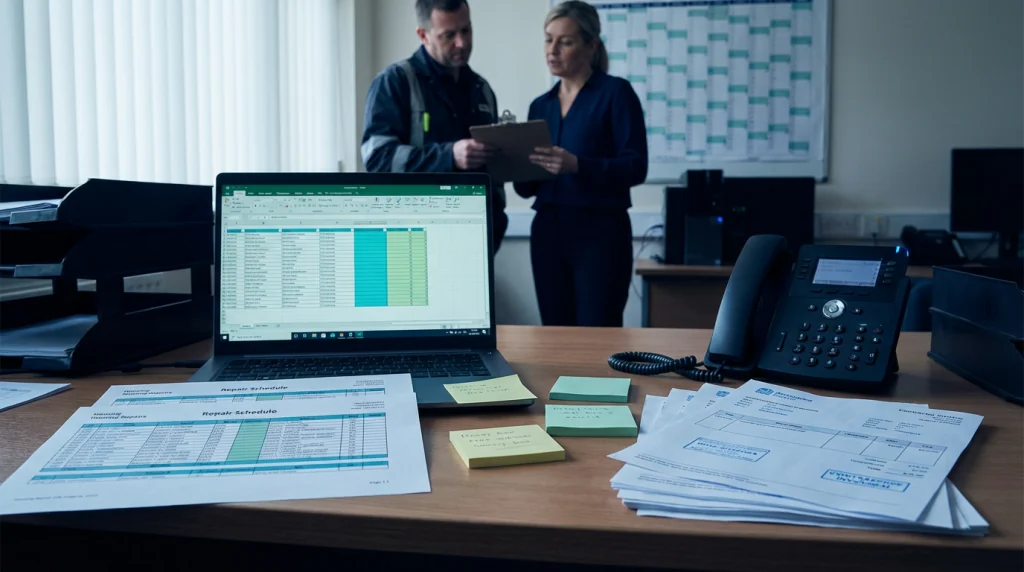
Many organisations still manage large estates with a patchwork of tools:
- Spreadsheets to track issues and appointments
- Email chains to coordinate surveyors, contractors, and internal teams
- Separate systems for compliance, repairs, asset data, and resident contact
- “Tribal knowledge” to explain why a case is delayed or what’s been tried before
That approach creates predictable failure points:
- Evidence is scattered, inconsistent, or hard to find when needed
- Repeat visits happen because the right context doesn’t travel with the job
- Root causes get missed because teams only see snapshots, not patterns
- Residents experience slow resolution and poor communication
Regulation and scrutiny: proving what you did (and when) matters
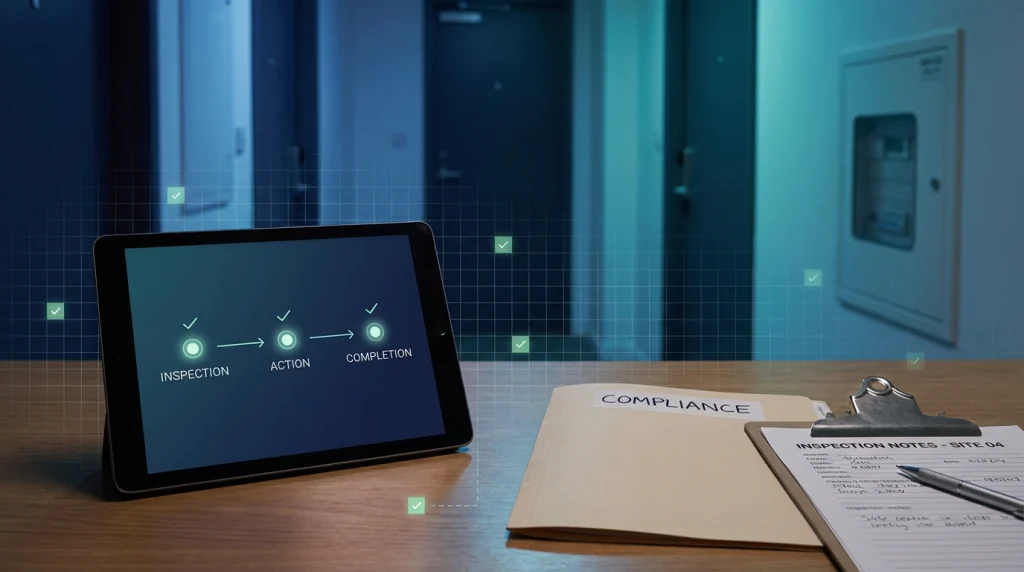
The direction of travel is clear: more focus on outcomes, accountability, and auditability.
Awaab’s Law is a good example. It didn’t invent damp and mould risk, but it has intensified the need to:
- Identify risk earlier
- Prioritise correctly
- Respond within defined timeframes
- Keep evidence of investigation, decisions, actions, and outcomes
Damp and mould is also just one of many compliance pressures. The bigger requirement is the same across them all: you need to show what you knew, what you did, and whether it worked.
Predictive and preventive maintenance: what “good” looks like

A modern approach is a joined-up workflow that connects three things:
- Real-time signals (what’s happening)
- Operational workflow (what needs to happen next)
- Auditable record (what happened, by whom, and when)
That means moving away from “dashboards for dashboards’ sake” and toward systems that drive decisions and action.
From insight to action (the missing link)
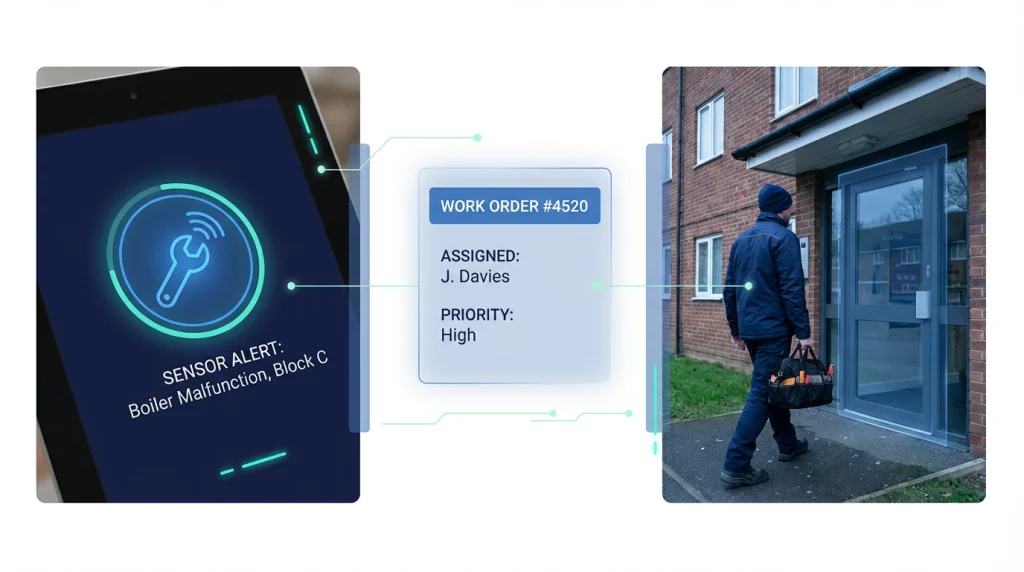
If an organisation can see a risk but can’t trigger the next step, the insight is effectively wasted.
Predictive maintenance becomes real when it can do things like:
- Confirm resolution and monitor for recurrence
- Create an alert when conditions indicate elevated risk
- Prioritise the case based on severity and resident vulnerability
- Trigger the right workflow (inspection, resident contact, remediation)
- Track every work order, visit, note, and outcome in one place
Damp and mould is the clearest example of “insights without actions are useless”

Damp and mould risk often develops over time. By the time it becomes a complaint, the situation can already be serious.
Real-time monitoring can add a practical layer of early warning. But the real value comes when monitoring is connected to action:
- A change in conditions triggers an alert
- The alert creates a task or work order
- The task routes to the right team (internal or third party)
- Updates are captured as the job progresses
- The outcome is recorded and can be reported on later
This is where a targeted solution (for damp and mould) fits into a wider strategy: healthy homes, better compliance, and fewer preventable escalations.
What an action-led maintenance platform enables
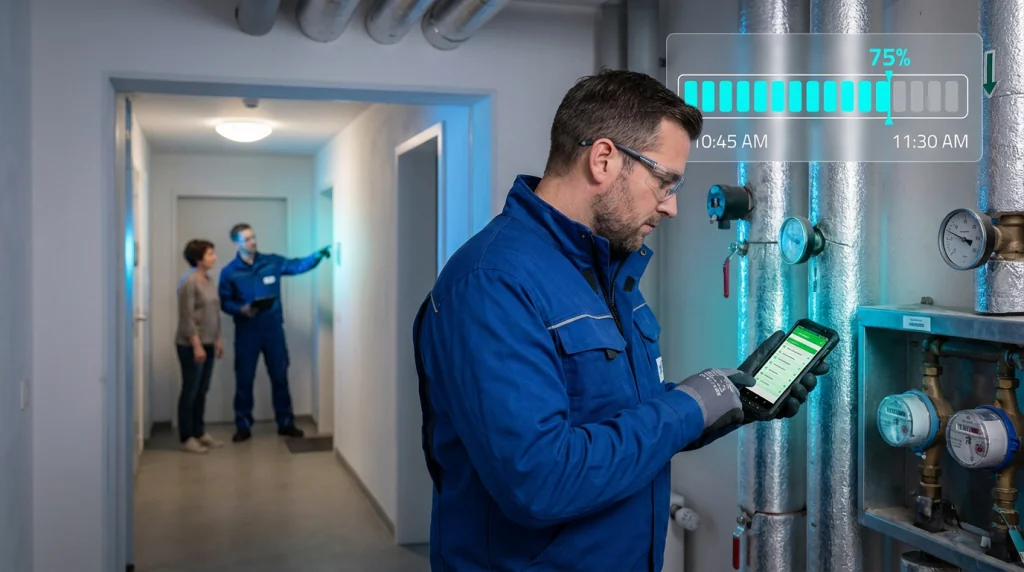
A joined-up platform approach can help organisations:
- Improve prioritisation by basing decisions on live signals, not just static data
- Reduce friction for teams by keeping context with the job
- Improve accountability by making ownership and timelines visible
- Support reporting by keeping an auditable trail end-to-end
- Reduce repeat visits by capturing evidence and outcomes once
Where GeoWorks and GeoSpaces fit (without changing everything)
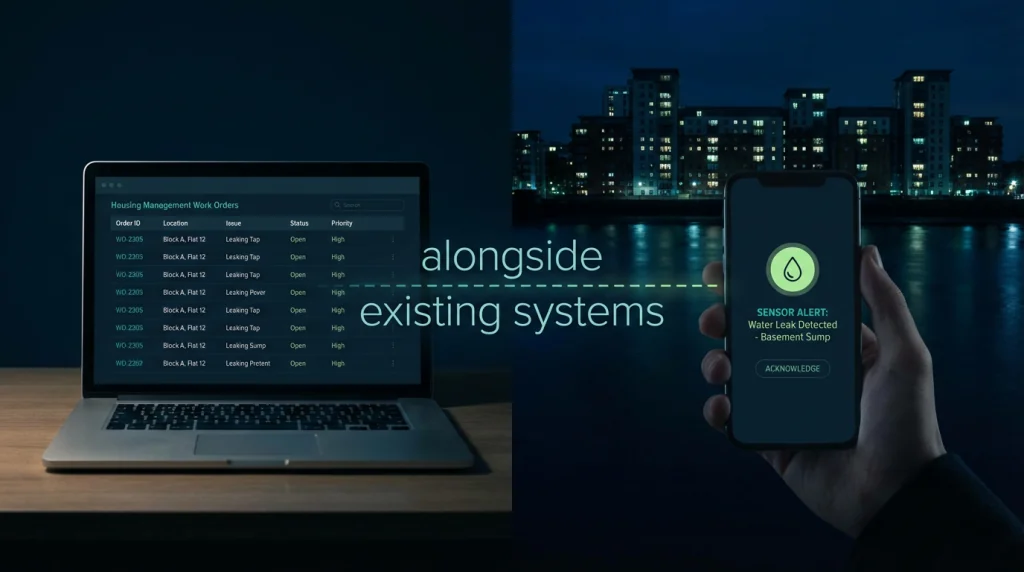
Many housing providers do not want a rip-and-replace programme. They want improvement without disruption.
A practical approach is to add an action layer that works alongside existing systems:
- Capture and manage work orders, tasks, and outcomes in a structured way
- Integrate via API so data can flow to existing housing management, repairs, or compliance platforms
- Connect real-time sensor signals (for example, damp and mould risk monitoring) into the workflow
In this model:
- GeoSpaces provides real-time monitoring for damp and mould conditions.
- GeoWorks helps turn that signal into action: creating, assigning, tracking, and evidencing the work that follows (or passing it to third-party systems/providers).
The point isn’t more insight. It’s faster resolution, fewer failures, and better evidence.
Key takeaway
Predictive and preventive maintenance in social housing is not a “nice to have”. It’s a practical way to protect residents, reduce operational pressure, and meet rising expectations for proof and accountability.
When real-time data is connected to an auditable workflow, you move from monitoring problems to actually resolving them.
FAQ
What is predictive maintenance in social housing?
Predictive maintenance uses data signals (for example from sensors, inspections, and repairs history) to identify risk early and intervene before problems escalate. In social housing, this is often focused on resident safety, compliance, and preventing repeat repairs.
What is preventive maintenance?
Preventive maintenance is scheduled or triggered work designed to stop issues happening in the first place. It can be time-based (planned servicing) or condition-based (triggered when data shows elevated risk).
How does real-time data improve damp and mould response?
Real-time data can provide early warning when conditions indicate increased risk of damp and mould. The impact is highest when those signals automatically trigger action: alerts, inspections, work orders, and a documented resolution process.
Why do housing providers need an auditable trail?
Because scrutiny is increasing. Providers need to show what they knew, what they did, when they did it, and whether the issue was resolved. An auditable trail helps with compliance, accountability, learning, and resident trust.
Do we need to replace our existing systems to do this?
Not necessarily. Many organisations add an action and evidence layer that integrates with existing repairs, housing management, and compliance platforms through APIs and workflows.