
Damp and mould issues in UK rental properties have never been more scrutinised than they are today. With Awaab’s Law now enforcing strict timeframes for remediation, property portfolio operators face unprecedented regulatory pressure to understand, identify, and address moisture-related problems swiftly and effectively.
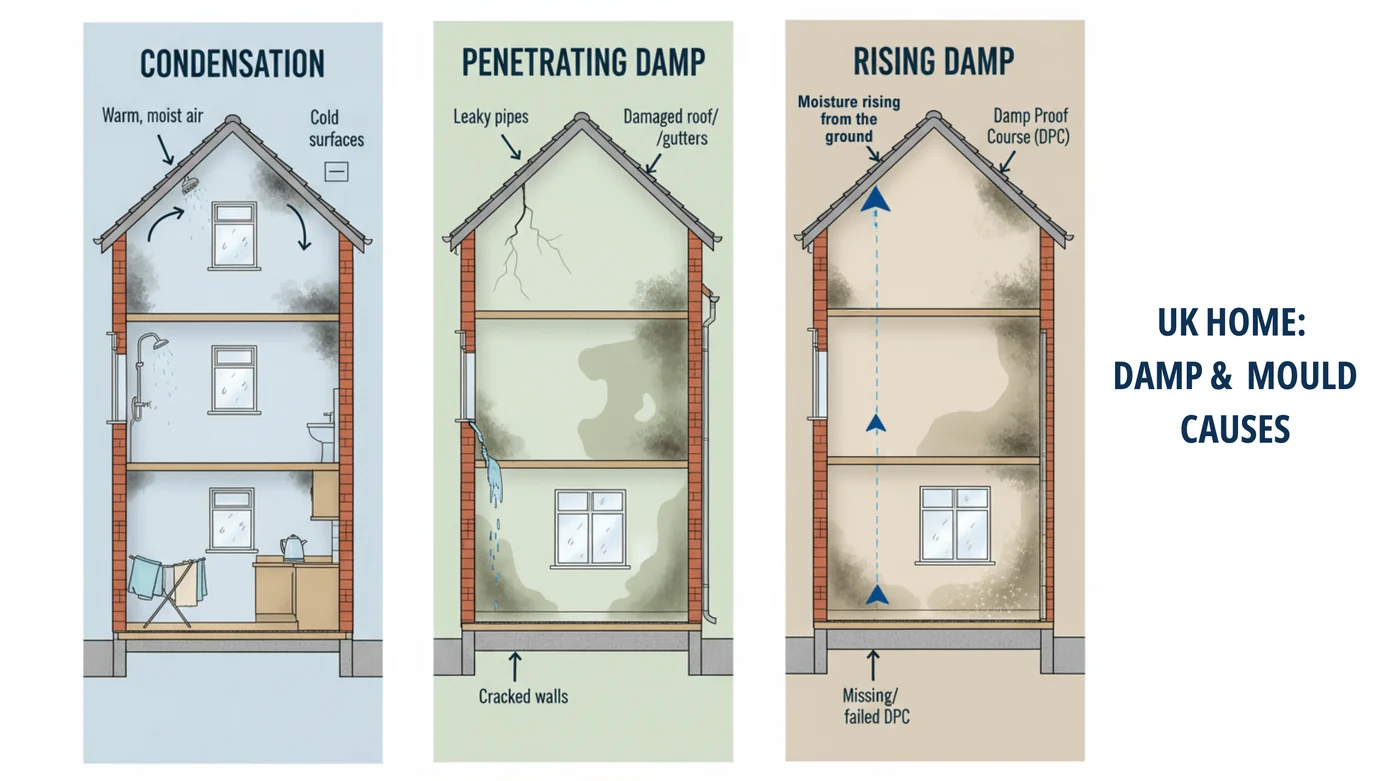
For social housing providers, Build-to-Rent (BTR) operators, and Purpose-Built Student Accommodation (PBSA) managers, the financial and reputational stakes have never been higher. A single mould outbreak can result in regulatory sanctions, tenant displacement costs, legal liability, and severe damage to organisational reputation. Understanding the root causes of damp and mould isn’t just about maintenance—it’s about risk management, compliance assurance, and duty of care to vulnerable residents.
The complexity of moisture-related issues in UK properties stems from our unique combination of climate challenges, building heritage, construction practices, and occupancy patterns. Unlike many European countries, the UK’s moderate maritime climate creates year-round conditions conducive to moisture problems, while our diverse building stock—from Victorian terraces to modern high-rises—presents varied vulnerabilities that require sophisticated understanding and tailored approaches.
The Building Physics of Moisture: Understanding the Science Behind Damp Problems
To effectively manage damp and mould risks across property portfolios, operators must understand the fundamental building physics that govern moisture behaviour. Every building exists in a constant state of moisture exchange with its environment, and problems arise when this exchange becomes unbalanced or uncontrolled.
Moisture moves through buildings via three primary mechanisms: vapour diffusion, air transport, and capillary action. Vapour diffusion occurs when water molecules move through building materials from areas of high vapour pressure to low vapour pressure—this is why moisture can travel through apparently solid walls. Air transport is far more significant, carrying moisture-laden air through gaps, cracks, and ventilation systems. Capillary action draws liquid water through porous materials, which is particularly problematic in older UK properties with solid walls and limited damp-proof courses.
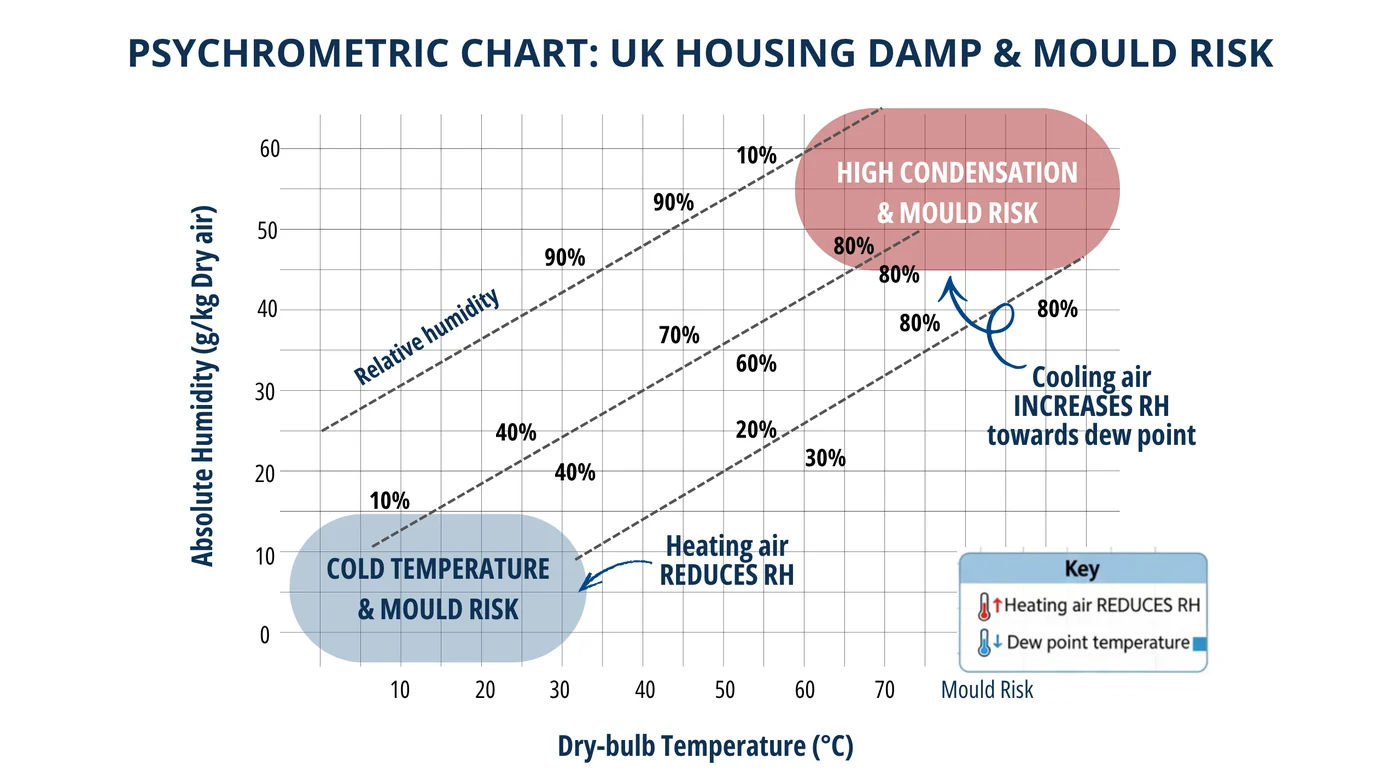
The critical concept for property managers is the relationship between relative humidity, temperature, and condensation risk. When warm, moisture-laden air contacts cold surfaces, condensation occurs. In UK properties, this happens predictably at thermal bridges (areas of poor insulation), single-glazed windows, external walls, and poorly heated spaces. The problem intensifies during winter months when heating patterns create significant temperature differentials between occupied and unoccupied spaces.
Environmental Conditions That Trigger Moisture Problems
The UK’s maritime climate creates challenging conditions for moisture management. Our weather patterns involve frequent temperature fluctuations, high atmospheric humidity levels (often 70-90%), and limited sunshine for natural drying. These conditions mean that UK properties are almost constantly at risk of moisture accumulation if not properly managed.
Seasonal variations compound these challenges. Autumn and winter bring extended periods of high external humidity combined with increased internal moisture production from heating, cooking, and drying activities. Spring introduces rapid temperature changes that can cause condensation on walls and windows as buildings warm up. Even summer presents risks, with activities like clothes drying and bathroom use creating significant internal moisture loads that must be managed through ventilation.
| Environmental Factor | Impact on Moisture Risk | Management Strategy |
|---|---|---|
| High External Humidity (>80%) | Reduces natural drying, increases condensation risk | Enhanced mechanical ventilation, dehumidification |
| Temperature Fluctuations | Creates thermal shock, condensation on cold surfaces | Improved insulation, consistent heating strategies |
| Limited Solar Gain | Reduces natural moisture evaporation | Mechanical drying systems, orientation consideration |
| Wind-Driven Rain | Penetrating damp through building envelope | Enhanced weatherproofing, cavity protection |
Construction and Building Fabric Vulnerabilities
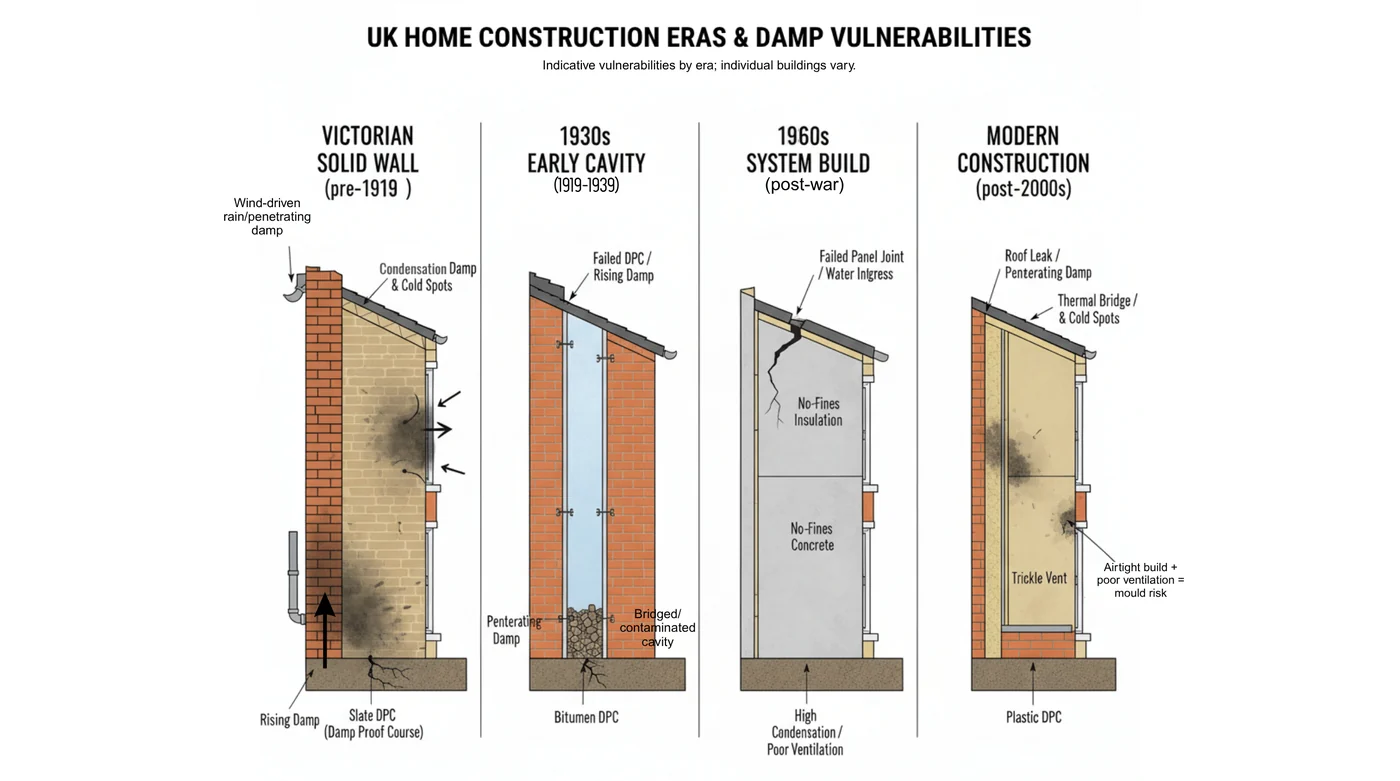
UK property portfolios typically span multiple construction eras, each presenting distinct moisture vulnerability profiles. Understanding these vulnerabilities is essential for predictive maintenance, risk assessment, and targeted intervention strategies. The interaction between historical construction methods and modern occupancy patterns often creates perfect storm conditions for damp and mould development.
Pre-1919 properties, particularly common in social housing portfolios, present significant challenges. These buildings typically feature solid masonry walls without cavity insulation or effective damp-proof courses. The lime mortars and permeable bricks used in their construction were designed for a different occupancy pattern—lower internal moisture production, irregular heating, and natural ventilation through gaps and fireplaces. Modern occupancy patterns, with consistent heating, sealed windows, and high moisture production, overwhelm these buildings’ natural moisture management capabilities.
Inter-war properties (1919-1939) often represent the worst combination of old and new construction methods. Early cavity walls were frequently built without proper cavity barriers, creating pathways for moisture penetration. The introduction of Portland cement mortars created harder, less breathable pointing that can trap moisture in masonry. Many of these properties underwent post-war modifications that inadvertently created moisture problems—blocking chimneys without providing alternative ventilation, installing central heating without considering moisture balance, or adding extensions that create new thermal bridges.
Modern Construction Challenges
While modern properties might appear less susceptible to moisture problems, they present their own unique challenges. High-performance building envelopes designed for energy efficiency can create internal moisture problems if ventilation systems are inadequate or poorly maintained. The trend toward airtight construction means that moisture has fewer escape routes, making mechanical ventilation systems critical for moisture control.
Modern materials and construction methods can also create unexpected moisture traps. Impermeable external wall coatings can prevent moisture evaporation from masonry. Complex building geometries with multiple thermal bridges create condensation risk areas. Even the timing of construction can create problems—newly built properties contain significant construction moisture that must dry out, and occupation before complete drying can lead to persistent moisture problems.
Occupant Behaviour and Lifestyle Impacts
The relationship between occupant behaviour and moisture problems is complex and often misunderstood. While some moisture production is inevitable from normal living activities, the way occupants manage heating, ventilation, and moisture-producing activities significantly influences damp and mould risk. For property portfolio operators, understanding these behavioural factors is essential for both problem resolution and prevention strategies.
Modern residential occupancy patterns create substantially higher moisture loads than historical norms. A typical family of four produces 10-15 litres of water vapour daily through breathing, cooking, washing, and drying activities. This moisture must be removed through ventilation or it will condense on cold surfaces, creating ideal conditions for mould growth. The challenge for property operators is that occupant education alone is rarely sufficient—building systems must be designed and maintained to cope with realistic occupancy patterns.
Heating patterns significantly influence moisture problems. Intermittent heating—warming properties quickly then allowing them to cool—creates temperature cycling that promotes condensation. Under-heating to save money leads to chronic condensation problems as relative humidity rises with falling temperatures. Conversely, overheating without adequate ventilation can create high moisture loads that overwhelm the building’s natural moisture management capacity.
High-Risk Occupancy Scenarios
Certain occupancy patterns significantly increase moisture risk and require enhanced monitoring and intervention strategies. Student accommodation faces particular challenges due to high occupancy densities, irregular heating patterns, and activities like clothes drying in bedrooms. Social housing often accommodates vulnerable residents who may struggle with heating costs, leading to under-heating and associated condensation problems. Large families in smaller properties create moisture loads that exceed the building’s natural capacity.
Seasonal occupancy patterns, common in some PBSA and BTR properties, create additional complications. Properties left unheated during vacations can develop severe condensation problems when reoccupied and heated rapidly. The solution requires strategic heating and ventilation programs during vacancy periods, not just reactive responses when problems emerge.
Maintenance and Management System Failures
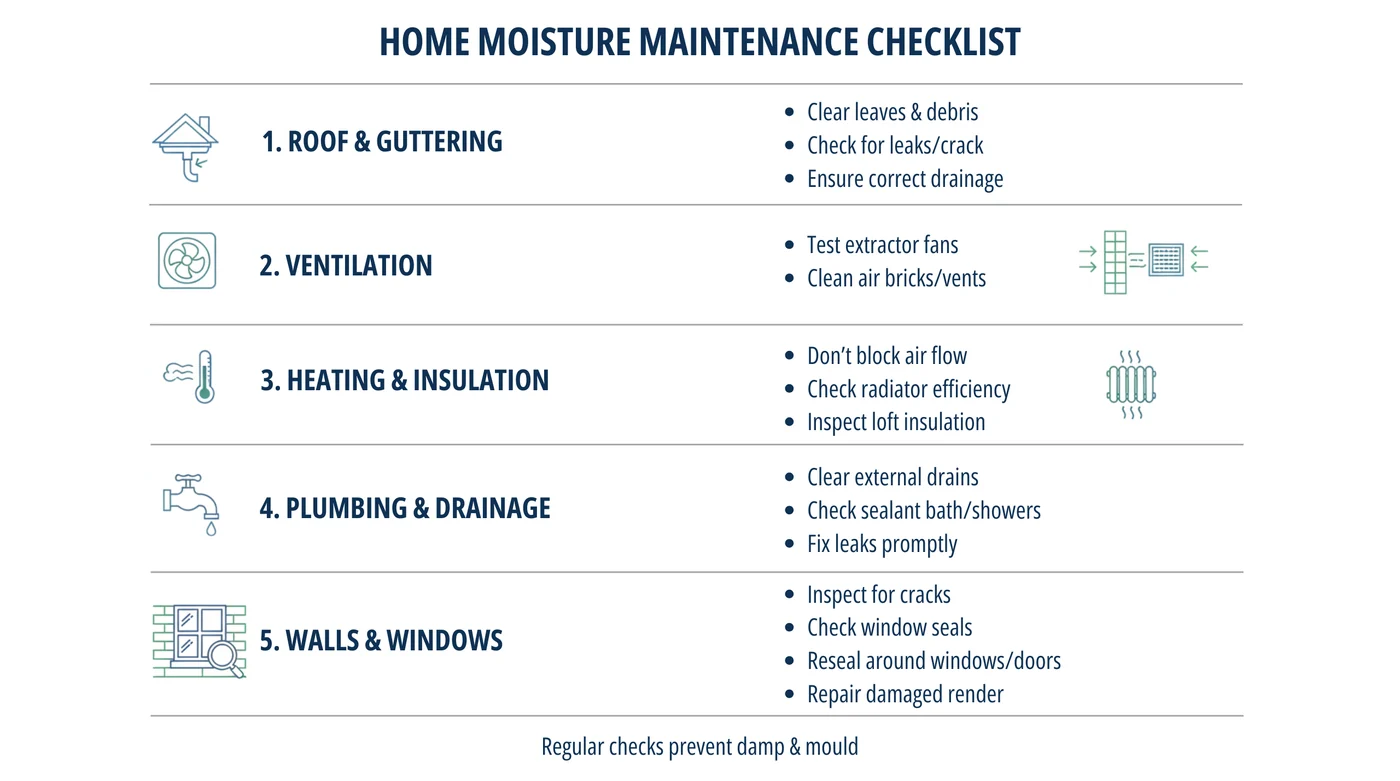
Even well-designed buildings with appropriate systems can develop serious moisture problems if maintenance regimes are inadequate or poorly targeted. For property portfolio operators, understanding the maintenance vulnerabilities that lead to damp and mould is essential for both preventive programs and cost-effective intervention strategies.
Ventilation system maintenance is often overlooked but critical for moisture control. Extract fans with blocked filters can become ineffective, while poorly maintained heat recovery ventilation systems can actually increase moisture problems by redistributing rather than removing humid air. Drainage systems require regular inspection and maintenance—blocked or damaged guttering, downpipes, and drainage create the perfect conditions for penetrating damp. Even minor maintenance issues like failed sealants around windows and doors can allow moisture ingress that leads to serious problems.
The interconnected nature of building systems means that maintenance failures in one area can cascade into moisture problems elsewhere. A blocked external drain can cause internal flooding, leading to long-term moisture problems in wall cavities. Failed heating system components can create localised cold spots that become condensation magnets. Understanding these system interdependencies is essential for effective maintenance planning and rapid problem diagnosis.
Emerging Risks and Future Considerations
Climate change is creating new challenges for moisture management in UK properties. Increased frequency of extreme weather events, including heavy rainfall and flooding, creates new risks for penetrating damp and long-term moisture problems. Rising temperatures combined with high humidity levels are extending the mould growth season and creating conditions where mould can establish in previously safe environments.
Energy efficiency retrofit programs, while essential for carbon reduction goals, can inadvertently create new moisture risks if not properly planned and executed. Adding insulation without addressing thermal bridges can create new condensation risk areas. Improving building airtightness without upgrading ventilation systems can trap moisture and create internal air quality problems. These challenges require sophisticated understanding of building physics and careful coordination between energy efficiency and moisture management objectives.
Professional Assessment and Monitoring Solutions
Understanding damp and mould causes is the foundation of effective property portfolio management. However, translating this knowledge into actionable prevention and response strategies requires sophisticated monitoring, assessment, and intervention capabilities that most property operators cannot develop internally.
Modern property portfolio management demands proactive approaches that identify and address moisture risks before they become health hazards, regulatory compliance issues, or major repair costs. This requires continuous environmental monitoring, predictive analytics, and rapid response capabilities that integrate seamlessly with existing property management systems.
Related Reading
Explore our Condensation vs Damp Diagnostic Guide to learn how to accurately identify different types of moisture problems in your properties.
Health Impact Awareness
Understand the serious health implications with our guide on The Hidden Health Risks of Damp and Mould for vulnerable populations in your properties.
Legal Compliance
Ensure your operations meet current requirements with our comprehensive Awaab’s Law Explained: Essential Compliance Guide.
Ready to take control of damp & mould risks in your portfolio? Discover proven tools for compliance and tenant protection.
Frequently Asked Questions
The most common causes are condensation due to inadequate ventilation (60% of cases), penetrating damp from building envelope failures (25%), and rising damp in older properties without effective damp-proof courses (15%). Modern properties typically experience condensation problems, while older buildings face all three types.
Mould spores can begin germinating within 24-48 hours in favourable conditions (relative humidity above 70%, temperatures 15-25°C, organic material present). Visible mould colonies typically appear within 7-14 days, but health risks can develop even before visible growth appears.
Pre-1919 solid wall properties, 1960s-70s system-built housing, converted flats in older buildings, and high-occupancy properties (HMOs, student accommodation) present the highest risks. Properties with complex geometries, north-facing orientations, or previous flood damage also require enhanced monitoring.
Condensation typically affects cold surfaces, appears seasonally, and can be wiped away easily. Penetrating damp creates damp patches after rain, often with tide marks and mineral staining. Rising damp affects ground floor walls up to 1-1.5m height with characteristic salt deposits. Professional moisture meters and thermal imaging provide definitive diagnosis.
Under Awaab’s Law: 1) Acknowledge report within 48 hours, 2) Arrange professional inspection within 14 days, 3) Implement temporary measures if health risks are present, 4) Identify root causes not just symptoms, 5) Develop comprehensive remediation plan with defined timeframes, 6) Consider temporary rehousing if risks are severe.
Yes, if not properly planned. Improving airtightness without upgrading ventilation can trap moisture. Adding insulation without addressing thermal bridges can create new condensation points. External wall insulation can change moisture dynamics in cavity walls. Always assess moisture implications of efficiency improvements and upgrade ventilation accordingly.
Occupant behaviour significantly influences moisture levels through heating patterns, ventilation use, and moisture-producing activities. However, buildings must be designed to cope with realistic occupancy patterns. Effective solutions combine appropriate building systems with occupant education, never relying solely on behaviour change.
Develop a risk matrix considering: building age and construction type, previous moisture problems, occupancy patterns, complaint history, vulnerable residents, and maintenance backlog. Properties with solid walls, high occupancy, vulnerable tenants, and poor maintenance records should receive priority assessment and preventive intervention.